
Chesterfield Wiki
Official wiki of Chesterfield information
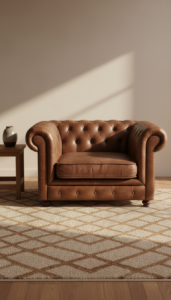
Choosing the right Chesterfield sofa is an investment in timeless style and enduring comfort. However, the journey from purchase to perfect placement in your home can be fraught with logistical challenges. In this guide, we focus on the critical, often-overlooked steps of measuring, transporting, and arranging your Chesterfield sofa. Mastering these practical aspects ensures a smooth experience, protects your investment, and guarantees your new centerpiece enhances your space exactly as envisioned.
Contents
Measure Twice, Buy Once: The Golden Rule
Before you even consider a purchase, precise measurement is non-negotiable. A Chesterfield’s imposing silhouette means standard sofa assumptions don’t apply. Start by measuring the intended space’s length, width, and height. Don’t forget to account for the depth of rolled arms and the space needed to walk around it comfortably—aim for at least 18 inches of clearance.
Next, measure your access routes. This is the most common pitfall. Document the width and height of every doorway, hallway, and stairwell the sofa must pass through, including any turns. Compare these figures to the sofa’s dimensions, remembering that you may need to tilt or pivot it. Always prioritize the smallest opening on the path.
- Create a Floor Plan: Use painter’s tape or newspaper to mock up the sofa’s footprint on your floor. This visual test is invaluable for spatial planning.
- Check the Specs: Reputable retailers provide detailed dimensions (HxWxD). Pay close attention to the “seat depth” for comfort and the “overall height,” especially if you have low windowsills or shelves.
- Consider Modular Options: For extremely tricky access, explore two-piece or modular Chesterfield designs that can be assembled in the room.
Navigating the Transport: Doorways, Stairs, and Tight Corners
Transporting a heavy, solid-framed Chesterfield requires preparation. If delivery is included, confirm if it’s “curbside” or “room-of-choice” and whether assembly is part of the service. For DIY moves, enlist enough help and gather moving blankets, straps, and a furniture dolly.
The key technique is to “walk” the sofa through obstacles. Never try to carry it flat through a doorway; instead, tilt it onto its back or side, whichever is narrower. Use the “pivot” method for tight corners, where one person guides the front while others rotate the base. Protect all surfaces, especially leather or delicate fabric, with blankets. Remove legs if possible, as this often provides crucial extra inches of clearance.
- Protect the Upholstery: Wrap the entire sofa in moving blankets secured with plastic wrap or straps to prevent scuffs and tears.
- Leg Removal: Most Chesterfield legs are screwed in. Use the correct tool and keep all hardware in a labeled bag. This simple step can make an impossible fit possible.
- Clear the Path: Remove rugs, door mats, and even interior doors from their hinges to create the widest possible passageway.
Arranging for Impact and Flow
Once safely in the room, placement is crucial for both aesthetics and function. A Chesterfield naturally commands attention, so consider it the anchor of your seating area. Floating it away from walls can define a space in an open-plan room and showcase its elegant silhouette from all angles. Alternatively, placing it against a wall remains a classic, space-efficient choice.
Balance its substantial presence with appropriately scaled furniture. A large, solid wood coffee table or a pair of substantial side tables will complement its proportions. Ensure there is a clear traffic flow around the seating area to maintain a sense of openness. Use lighting—such as a floor lamp behind it or a table lamp beside it—to highlight its tufting and texture, creating depth and warmth.
- The Focal Point Rule: Position the sofa to face the room’s natural focal point, be it a fireplace, a large window, or a media unit.
- Layer Your Lighting: Combine overhead, ambient, and task lighting. A Chesterfield looks magnificent when grazed by light, which accentuates its button tufting and rolled arms.
- Accessorize Thoughtfully: Add throw pillows and a blanket in complementary textures and colors to soften its formal lines and enhance comfort without obscuring its iconic design.
Conclusion
Successfully integrating a Chesterfield sofa into your home hinges on meticulous planning. By mastering the logistics—from precise measuring and safe transport to strategic arrangement—you transform a potential headache into a seamless process. This practical foresight ensures your Chesterfield becomes a cherished, functional centerpiece for years to come.
Read more at https://chesterfielddeals.com/category/chesterfield/what-materials-are-chesterfield-sofas-made-from/
Why Chesterfield Sofas Are the Perfect Addition to Your Home Office
How to Incorporate a Chesterfield Sofa into a Modern Living Room
The History and Evolution of the Chesterfield Sofa
Chesterfield banken voor elke stijl