
Chesterfield Wiki
Official wiki of Chesterfield information
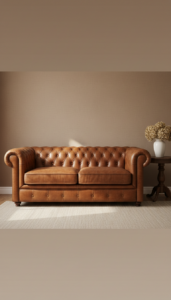
Selecting the perfect wall color for your Chesterfield sofa is more than just a design choice—it’s about creating a harmonious backdrop that enhances the sofa’s iconic silhouette, rich texture, and timeless appeal. Whether your Chesterfield is upholstered in classic leather or plush velvet, the right wall color can elevate your entire room from ordinary to extraordinary. This guide explores actionable strategies to avoid common pitfalls when pairing wall colors with your Chesterfield sofa, ensuring your investment remains the stunning focal point it was meant to be.
Contents
Common Mistakes in Wall Color Selection
Many homeowners unintentionally diminish their Chesterfield sofa’s impact by choosing wall colors that compete with its distinctive features. One frequent error is selecting colors with the same undertone as the sofa’s upholstery, which causes the piece to blend into the background rather than stand out. For a classic brown leather Chesterfield, painting the walls a warm beige can result in a flat, uninspired look that lacks depth. Similarly, a navy blue velvet sofa against a deep blue wall can feel overwhelming and claustrophobic.
Another common mistake is underestimating the effect of lighting on color perception. A wall color that looks perfect in the showroom under fluorescent lights may appear entirely different in your living room’s natural daylight. A cool gray, for instance, can take on a bluish tint that clashes with the warm tones of a cognac Chesterfield. Additionally, ignoring the sofa’s finish—whether matte velvet or glossy leather—can lead to mismatched textures that disrupt the room’s visual flow.
Overlooking the Sofa’s Dominant Hue
Your Chesterfield sofa’s primary color dictates the entire room’s palette. A common oversight is failing to analyze its dominant hue before selecting wall paint. For a green velvet Chesterfield, pairing it with a sage green wall may seem harmonious, but without sufficient contrast, the sofa loses its architectural presence. The rolled arms and deep button tufting become less defined, reducing the visual interest that makes the Chesterfield legendary. Always identify whether your sofa leans warm or cool to guide your wall color choice effectively.
Smart Strategies to Avoid Color Clashes
To ensure your Chesterfield sofa remains the star of the room, adopt a strategic approach to wall color selection. Start by using the 60-30-10 rule: the wall color should occupy 60% of the visual space, the sofa’s color should represent 30%, and an accent color should account for the remaining 10%. This balance prevents any single element from overwhelming the others. For a dark leather Chesterfield in espresso or black, opt for light to medium wall tones like soft cream, warm ivory, or pale greige to create a striking contrast that highlights the sofa’s silhouette.
Another smart strategy is to use a color wheel. Complementary colors—those opposite each other on the wheel—create dynamic visual interest without clashing. For a red or burgundy Chesterfield, consider walls in a muted sage or olive green. For a blue velvet sofa, warm terracotta or soft coral walls can produce a sophisticated, cohesive look. These pairings enhance the sofa’s richness while keeping the room inviting. Always test paint samples on your wall and observe them at different times of day to ensure the relationship between the sofa and wall color remains harmonious under varying light conditions.
Balancing Texture and Finish
The texture of your Chesterfield’s upholstery plays a crucial role in color perception. A matte velvet absorbs light, making colors appear deeper and more saturated, while glossy leather reflects light and can make shades look brighter. Avoid pairing a highly textured or busy wall covering—like heavy damask wallpaper—with a tufted velvet Chesterfield, as this creates visual chaos. Instead, choose smooth, matte wall finishes that let the sofa’s texture shine. For a leather Chesterfield with a sheen, consider walls with a subtle eggshell finish to balance reflection without competing for attention.
Practical Tips for a Perfect Backdrop
Applying these insights to your home requires thoughtful execution. Start by examining your Chesterfield’s material: leather tends to have warm or cool undertones depending on its tanning process, while velvet can vary widely in hue saturation. A simple test is to hold a large piece of white paper next to your sofa; the white will reveal any yellow, blue, or red undertones in the fabric. Then, select wall paint that contrasts without fighting—for a warm-toned sofa, choose cool neutrals like dove gray or soft blue-gray; for a cool-toned sofa, warm neutrals like greige or creamy white work best.
Another practical tip is to incorporate accent walls with restraint. If you’re drawn to a bold wall color, reserve it for a single wall behind the sofa while keeping surrounding walls neutral. This strategy frames the Chesterfield without overwhelming the room. For example, a deep charcoal accent wall behind a tan leather Chesterfield creates dramatic contrast, while adjacent walls in pale linen keep the space airy. Also, consider the room’s size: darker wall colors can make a small room feel smaller, so balance a dark Chesterfield with lighter walls to maintain spatial openness.
- Tip 1: Test paint samples on multiple walls and observe them alongside your sofa during morning, afternoon, and evening light to see how undertones shift.
- Tip 2: Use a color harmony tool online to upload a photo of your Chesterfield and generate complementary wall palettes for instant visualization.
- Tip 3: Incorporate decor elements like throw pillows, rugs, or artwork that bridge the wall and sofa colors, creating a cohesive look that reduces visual tension.
- Tip 4: For open-plan spaces, ensure the wall color flows smoothly from one zone to the next, using the Chesterfield as a transition piece between areas with different functions.
Conclusion
Mastering the art of pairing wall colors with your Chesterfield sofa is essential for showcasing its elegance without common design missteps. By avoiding mistakes like ignoring undertones and lighting, and by applying strategies such as the 60-30-10 rule and complementary color theory, you can create a backdrop that enhances your sofa’s iconic design. Remember to balance texture and finish, test paint samples rigorously, and let your Chesterfield’s unique character guide your choices. Armed with these insights, you’re ready to transform your space into a sophisticated retreat where your Chesterfield sofa truly shines.
Read more at https://chesterfielddeals.com/category/chesterfield/what-wall-color-goes-well-with-a-chesterfield-sofa/
Link Cloaking Best Practices | Cheapest Shopify Plan | Speed Up WordPress | Wat zijn de voordelen van een Chesterfield bank? | Tips voor een kleine slaapkamer