
Chesterfield Wiki
Official wiki of Chesterfield information
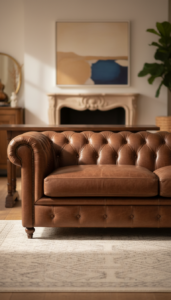
Choosing a Chesterfield sofa is an investment in timeless style, but many buyers focus solely on aesthetics and overlook critical construction details. This guide reveals the top scaling errors people make when buying a Chesterfield sofa—and how to avoid them to ensure your purchase lasts for decades.
Contents
- Scaling Error 1: Ignoring Frame Construction
- Scaling Error 2: Overlooking Spring System Quality
- Scaling Error 3: Misjudging Upholstery Durability
- Scaling Error 4: Failing to Check Tufting Density
- Scaling Error 5: Neglecting Arm and Back Comfort
- Scaling Error 6: Skipping the Measurement Phase
- Conclusion
Scaling Error 1: Ignoring Frame Construction
The frame is the backbone of your Chesterfield sofa. Many budget-friendly options use particleboard or MDF, which warps and cracks under weight. A high-quality Chesterfield frame should be crafted from kiln-dried hardwood—typically beech, oak, or ash. This ensures structural integrity and prevents costly sagging.
When inspecting a frame, look for reinforced corner blocks and dowel joints rather than staples or nails. A solid frame supports deep button tufting and rolled arms without compromising shape over time. Avoid models that feel light or have visible gaps in the wood joints.
Scaling Error 2: Overlooking Spring System Quality
The suspension system determines how well your sofa supports weight and bounces back. Cheap sofas use webbing or mesh, which stretches and loses tension. The gold standard for a Chesterfield sofa is the eight-way hand-tied coil spring system. These springs provide even weight distribution and exceptional longevity.
Sinuous springs (serpentine) are a budget alternative but should have gauge 8 or 9 wire thickness. Test the sofa by sitting and standing multiple times. If you hear creaking or feel uneven support, the spring system is likely substandard. This is a common scaling error that leads to premature flattening.
Scaling Error 3: Misjudging Upholstery Durability
Not all leather or velvet is created equal. For leather Chesterfields, look for full-grain or top-grain hide with a thickness of 1.2mm to 1.4mm. Bonded leather or polyurethane-coated options peel and crack within two years. For velvet, choose high-density cotton or polyester blends with a Martindale rub count above 40,000 cycles.
Check the fabric’s backing and stitching. Loose threads or uneven seams indicate poor craftsmanship. Remember, the signature rolled arms and deep button tufting create extra stress on upholstery—low-quality material will fail first at these stress points.
Scaling Error 4: Failing to Check Tufting Density
Deep button tufting is the hallmark of a Chesterfield sofa, but not all tufting is equal. High-quality sofas have buttons spaced 10-12 inches apart, with deep, symmetrical folds. Cheap alternatives use glued-on buttons that detach quickly or shallow tufting that flattens after minimal use.
Press down on the tufted areas. The fabric should hold its shape and return when released. Also, verify that the back panel has full tufting—some manufacturers only tuft the front panel, which looks incomplete from certain angles. This error affects both aesthetics and structural longevity.
Scaling Error 5: Neglecting Arm and Back Comfort
Chesterfield sofas are famous for their rolled arms, but design can sometimes compromise comfort. Many buyers fail to test the arm height relative to their body. Arms that are too tall or too short make relaxing difficult. Standard rolled arms should be 24-26 inches high, with a gentle curve that supports your shoulders.
The backrest angle is equally important. A 10- to 15-degree recline offers the best balance between posture support and lounging. If the backrest is too vertical, you’ll tire quickly; too reclined, and it strains your lower back. Sit for at least 10 minutes before purchasing to confirm ergonomic fit.
Scaling Error 6: Skipping the Measurement Phase
One of the most common scaling errors is ordering a Chesterfield sofa without verifying doorways, hallways, and elevator dimensions. Standard Chesterfields range from 72 to 96 inches wide, with a depth of 34 to 38 inches. Measure all access points, including stairwells, and account for the sofa’s height with legs and cushioning.
Many buyers also forget to measure the room’s proportions. A oversized sofa in a small room overwhelms the space, while a undersized one gets lost in a large area. Use painter’s tape to outline the sofa’s footprint on your floor before committing. This prevents costly returns and delivery headaches.
Conclusion
- Verify frame materials: Choose kiln-dried hardwood over particleboard for structural longevity.
- Inspect spring systems: Prefer eight-way hand-tied coils over webbing or thin sinuous springs.
- Assess upholstery quality: Full-grain leather or high-rub-count velvet withstands daily wear.
- Check tufting depth: Ensure buttons are sewn deep and evenly spaced on front and back panels.
- Test comfort personally: Evaluate arm height, backrest angle, and seat depth during a 10-minute sit.
- Measure thoroughly: Confirm sofa dimensions fit your home’s entryways, hallways, and room size.
Read more at https://chesterfielddeals.com/category/chesterfield/what-should-i-consider-when-buying-a-chesterfield-sofa/
https://ccombox.com/what-should-i-consider-when-buying-a-chesterfield-sofa-guide
https://ccombox.com/chesterfield-sofa-maintenance-tips
https://ccombox.com/choosing-the-right-chesterfield-leather
https://blog.chesterfield.com/nl/hoe-onderhoud-je-een-chesterfield-bank/