
Chesterfield Wiki
Official wiki of Chesterfield information
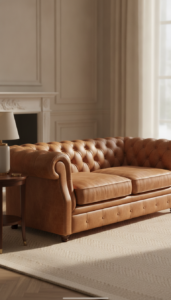
Customizing the color of a Chesterfield sofa opens up a world of possibilities, but it also requires a clear strategy to avoid common pitfalls. This guide focuses on the most frequent mistakes people make when choosing colors for their Chesterfield sofa, ensuring you invest wisely in a piece that complements your home for decades.
Contents
Overlooking Fabric Texture & Sheen
One of the most subtle yet impactful mistakes is choosing a color based solely on a tiny swatch without considering how the fabric’s texture and finish will affect the final look. A deep burgundy in plush velvet will absorb light and feel rich, while the same color in a matte tweed will appear more muted and casual. The signature deep button tufting on a Chesterfield sofa means light and shadow play across the surface, making a high-sheen leather appear lighter at the peaks and darker in the tufts.
Always request a large sample (at least 12” x 12”) and drape it over a chair or pillow in the room where the sofa will live. Observe how the fabric behaves with the rolled arms and button detailing—a glossy finish can look elegant in a formal setting but may feel cold in a cozy den. Velvet, on the other hand, offers a softer light reflection that enhances the traditional elegance of the design.
Practical Check
- Holding a small swatch against the sofa is misleading—the sheen and texture change across larger surfaces.
- Leather tends to show more color variation due to natural grain, while velvet maintains a uniform hue.
- Test with simulated tufting by pinching the fabric to see how shadows alter the perceived color.
Ignoring Room Lighting Conditions
A color that looks perfect under the bright, cool lights of a showroom can appear drab or harsh in your warm, dimly lit living room. The fact that a Chesterfield sofa is often the largest piece of furniture in a room amplifies this effect. Natural daylight, incandescent bulbs, and LED lights all render colors differently—a navy blue can turn muddy under yellow light, and a soft gray can look blue under cool white LEDs.
Take your fabric sample home and view it at different times of the day: morning, midday, and evening. Also, check it under your existing light fixtures. If you plan to store the sofa in a room with significant window exposure, remember that UV light can fade certain dyes over time—discuss fade resistance with your supplier when customizing.
Quick Test Guide
- Morning light is cool and blue—ideal for checking if the color appears cold.
- Evening light is warm and amber—shows if the color becomes too rich or dark.
- Artificial light at night reveals how the tufting and rolled arms create depth.
Forgetting About Surrounding Context
A Chesterfield sofa is a statement piece, but it must still harmonize with the rest of your decor. A common mistake is selecting a bold color—like emerald green or royal red—without considering the floor tones, wall colors, and existing furniture. For instance, a warm red Chesterfield may clash with cool grey flooring, while a charcoal sofa might look flat against a dark wall.
To avoid this, create a mood board that includes your wall paint, rug, and key accent pieces. The generous cushioning and classic silhouette of the sofa can handle strong colors, but they need a neutral backdrop or complementary accents to shine. Remember that the color you choose will also affect the perceived size of the room—lighter shades make a small space feel larger, while darker tones add intimacy.
Context Checklist
- Flooring: Match wood tones with warm leathers; dark carpets suit light upholstery.
- Wall color: Use a color wheel to find complementary or analogous shades.
- Existing furniture: Ensure the sofa color doesn’t compete with busy patterns.
Conclusion
- Mistake 1: Choosing color based on small swatches alone—always test large samples on the actual sofa shape.
- Mistake 2: Ignoring how lighting transforms color throughout the day—observe samples at different times.
- Mistake 3: Forgetting the surrounding room context—create a mood board to ensure harmony.
- Mistake 4: Overlooking fabric texture’s effect on color perception—velvet, leather, and tweed each behave differently.
- Mistake 5: Failing to discuss fade resistance and UV protection with your supplier for long-lasting beauty.
Read more at https://chesterfielddeals.com/category/chesterfield/can-i-customize-the-color-of-a-chesterfield-sofa/
Latest from CCombox | Chesterfield Blog NL | House of Chesterfield NL